






We understand well that for patients with chronic diseases such as diabetes and osteoporosis, missing teeth without restoration affects nutritional intake, while wanting implants yet worrying that their physical condition cannot support the healing period—this dilemma is something we empathize with.
Medical research has long confirmed that hyperglycemia significantly interferes with the “osseointegration” process between implant and alveolar bone, greatly prolonging healing time. If blood glucose control is poor, implant failure risk is much higher than in healthy people. At the same time, a hyperglycemic environment easily breeds oral bacteria, increasing the probability of peri-implantitis. Patients with osteoporosis, due to low bone density and sparse trabecular bone, find it difficult for implants to obtain firm primary anchorage, with higher loosening risk.
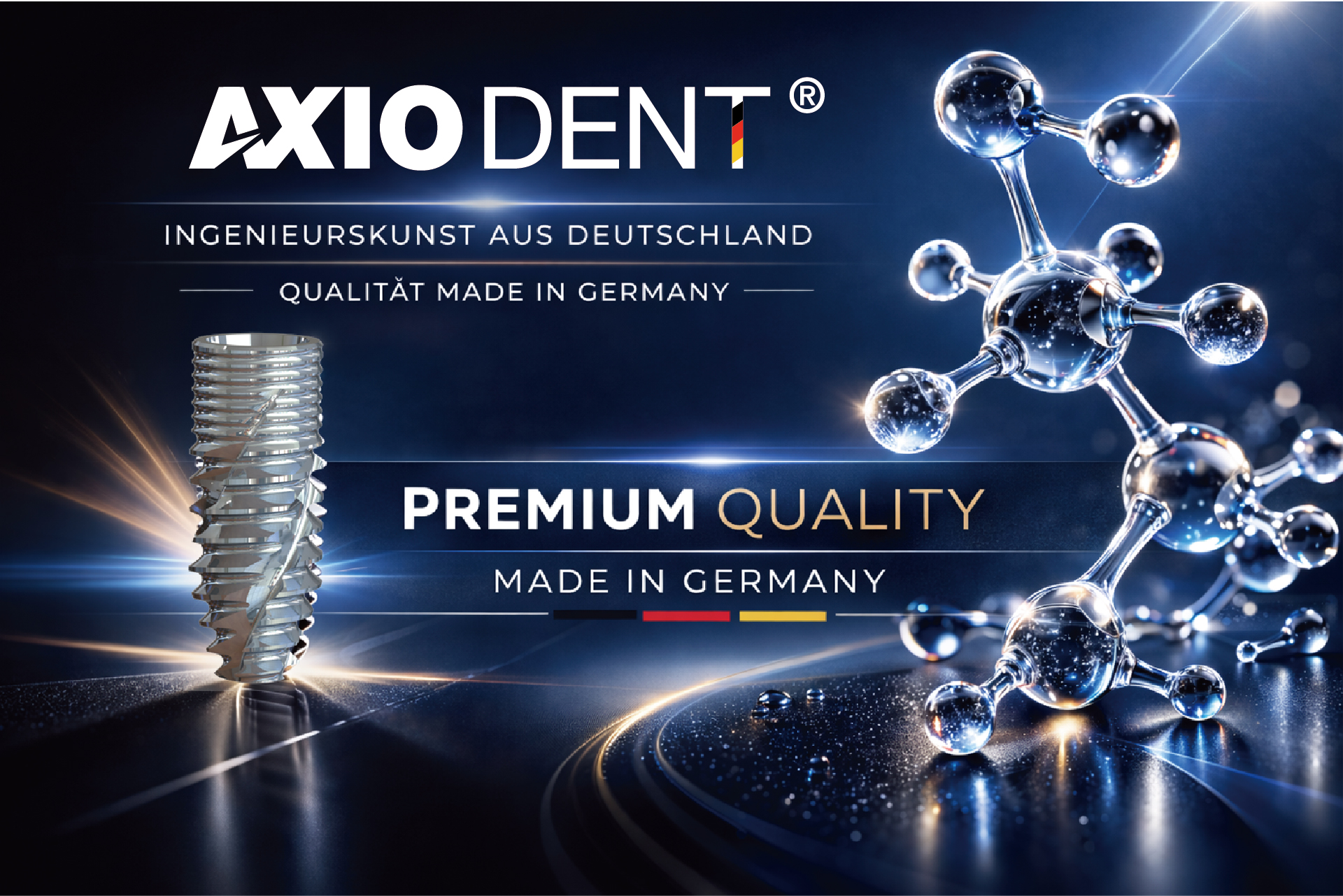
The core difficulties of dental implantation in chronic disease patients are concentrated in three aspects: slow osseointegration, high infection risk, and poor primary stability. This is precisely the clinical proposition that our AXIODENT® implant system R&D team has been committed to overcoming since its founding.
As an implant system brand originating from Berlin, we offer a systematic response from material, surface treatment, to structural design:
In terms of material, we use industry-selected Grade 4 cold-worked titanium. After cold working strengthening, tensile strength is increased to 875 MPa—enough to withstand daily chewing stress while minimizing immune rejection risk, building the first biological barrier for chronic disease patients with weaker immunity.
In terms of surface treatment, we apply SLA surface treatment technology. Through sandblasting and acid etching, a micro-rough structure is constructed to build an “attachment bridge” for osteoblasts; at the same time, ultra-clean cleaning and hydrophilic coating ensure the implant maintains optimal biological activity at factory release. Clinical studies confirm that this hydrophilic surface can significantly enhance osseointegration under diabetic conditions and effectively shorten the healing cycle, so the wait is no longer endless.
In terms of structural design, we studied the jaw characteristics of Asian patients and doctors’ operating habits. We adopt bone chip compaction and internal bone decompression design, aiming to improve osteogenesis quality and reduce marginal bone resorption. At the same time, a 10.7° golden internal conical connection paired with an internal hex interlocking structure produces a “cold welding effect,” making the abutment and implant almost merge into one, effectively eliminating microgaps and screw loosening; the sealed bacteria-resistant connection further reduces infection risk.
In terms of quality, we insist on production in Germany. Every implant is fully traceable and holds multiple authoritative certifications including U.S. FDA, EU CE, German DQS, and China NMPA. We always integrate the brand philosophy of “advanced, excellent, integrity, ideal” into every process and every quality inspection.
For chronic disease patients, dental implantation is not a matter of luck, but of following the attending physician’s advice, completing a comprehensive health assessment, and making a scientific selection. The German AXIODENT® implant system takes German precision as its foundation and Asian clinical needs as its guide—we firmly believe that exquisite craftsmanship and thoughtful design can keep dental implantation from becoming a regret due to physical conditions.